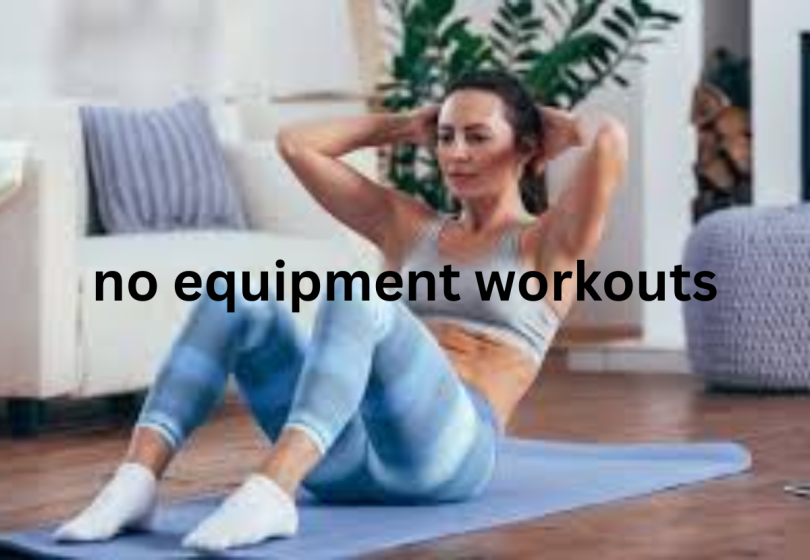

Let’s face it—life is busy. Between work, family, studies, and everyday stress, finding time (and motivation) to go to the gym isn’t always easy. And even when you want to work out, expensive equipment or gym memberships can feel like a barrier.
That’s exactly why no equipment workouts have become so popular. They’re simple, effective, affordable, and—best of all—you can do them anywhere.
In this detailed guide, we’ll talk about what no equipment workouts really are, how they work, their benefits, their drawbacks, and how you can make them work for your fitness goals.
What Are No Equipment Workouts?
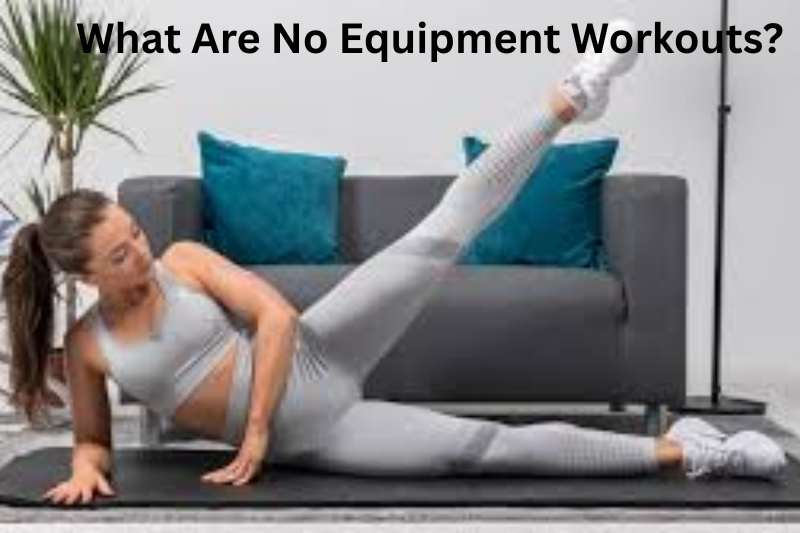
No equipment workouts are exercises that rely entirely on your body weight instead of gym machines, dumbbells, or tools. Your body becomes the resistance.
Classic examples include:
- Push-ups
- Squats
- Lunges
- Planks
- Burpees
These exercises may look simple, but when done correctly and consistently, they can help you build strength, endurance, flexibility, and overall fitness.
The beauty of no equipment workouts is that they don’t depend on location. Whether you’re at home, in a hotel room, or outside in a park, you can always fit in a workout.
Why No Equipment Workouts Are So Effective
Many people believe that without weights or machines, workouts won’t be effective. But that’s a myth.
Here’s why no equipment workouts actually work very well:
1. They Train Your Whole Body
Most no equipment workouts are compound movements, meaning they use more than one muscle group at a time. For example, a squat works your legs, glutes, core, and even your lower back.
This makes workouts more efficient and functional.
2. They Improve Functional Strength
Functional strength is the strength you use in daily life—lifting, bending, pushing, pulling, and balancing. No equipment workouts mimic natural body movements, making your body stronger for real-life activities.
3. They Boost Cardiovascular Health
When done with minimal rest or in circuit style, no equipment workouts can raise your heart rate quickly, improving stamina and heart health.
4. They Encourage Consistency
Since no equipment workouts remove common excuses like “I don’t have time” or “I don’t have a gym,” people are more likely to stick with them long-term—and consistency is where real results come from.
Major Benefits of No Equipment Workouts
Let’s take a deeper look at the biggest benefits of no equipment workouts.
1. No Cost Involved
One of the biggest advantages is that no equipment workouts are completely free. No gym fees, no fancy machines, no maintenance costs.
This makes fitness accessible to everyone.
2. Workout Anytime, Anywhere
You don’t need a special place or setup. A small space is enough. This flexibility makes it easier to stay active even on busy days.
3. Beginner-Friendly
Most no equipment workouts can be modified. Push-ups can be done on knees, squats can be shallow, and planks can be held for shorter times.
This makes them ideal for beginners.
4. Builds Muscle Endurance and Strength
While heavy weights are great for building size, no equipment workouts are excellent for building muscle endurance, tone, and overall strength.
5. Improves Balance and Coordination
Since your body has to stabilize itself during movements, your balance and coordination naturally improve over time.
6. Low Risk of Injury
When done with proper form, no equipment workouts are generally safer than lifting heavy weights, especially for beginners.
Drawbacks of No Equipment Workouts
While no equipment workouts are great, it’s also important to be honest about their limitations.
1. Limited Muscle Growth for Advanced Lifters
If your goal is extreme muscle size (bodybuilding-level gains), no equipment workouts alone may not be enough once you reach an advanced level.
Progressive overload becomes harder without added resistance.
2. Can Become Repetitive
Doing the same exercises repeatedly may feel boring over time. Without creativity or variation, motivation can drop.
3. Harder to Target Specific Muscles
Gym equipment allows precise isolation of certain muscles. With no equipment workouts, most movements work multiple muscles, making isolation more challenging.
4. Progress Requires Creativity
To keep improving, you’ll need to adjust reps, tempo, rest time, or exercise difficulty. This takes some planning and patience.
You may also like to read these posts:
Daily Home Workout Plan: A Complete and Detailed Guide for a Healthier Life
Easy Home Workouts: A Simple and Practical Way to Stay Fit at Home
Full Body Home Workouts: A Complete Guide to Training Your Entire Body at Home
Home Exercise Routines: A Complete Guide to Staying Fit Without Leaving Your Home
Best No Equipment Workouts by Muscle Group
Here are some effective no equipment workouts categorized by body area:
Upper Body
- Push-ups
- Diamond push-ups
- Pike push-ups
- Shoulder taps
Lower Body
- Bodyweight squats
- Lunges
- Wall sits
- Glute bridges
- Single-leg squats (advanced)
Core
- Planks
- Side planks
- Bicycle crunches
- Mountain climbers
- Leg raises
Full Body & Cardio
- Burpees
- Jumping jacks
- High knees
- Skaters
- Bear crawls
Combining these exercises creates a complete full-body routine.
Sample No Equipment Workout Routine (Detailed)
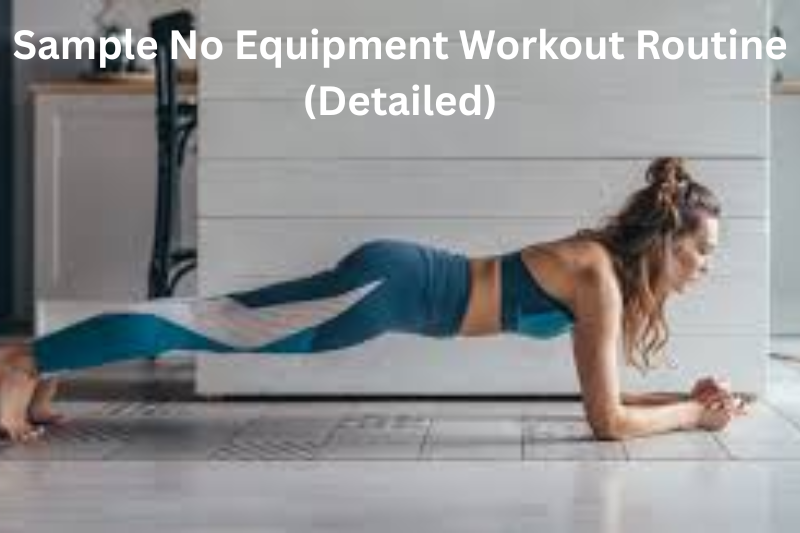
Beginner to Intermediate Routine
Perform each exercise for 40 seconds, rest 20 seconds. Complete 3 rounds.
- Squats
- Push-ups
- Lunges
- Plank
- Jumping jacks
- Mountain climbers
Total time: about 25–30 minutes
This routine improves strength, cardio, and endurance—all without equipment.
Tips to Get Better Results from No Equipment Workouts
To maximize results, keep these points in mind:
- Focus on form over speed
- Increase difficulty gradually (more reps, slower tempo)
- Train consistently (3–5 times per week)
- Warm up and cool down to prevent injury
- Listen to your body and rest when needed
Who Are No Equipment Workouts Best For?
No equipment workouts are ideal for:
- Beginners starting fitness
- Busy professionals
- Students
- Home workout lovers
- Travelers
- Anyone on a budget
They’re also a great foundation before transitioning into weighted training.
Final Thoughts
No equipment workouts prove that fitness doesn’t have to be complicated or expensive. With the right approach, they can help you build strength, burn fat, improve endurance, and feel more confident in your body.
While they may have a few drawbacks, the benefits far outweigh the limitations—especially for people who value convenience and consistency.
If you stay disciplined, creative, and patient, no equipment workouts can transform your fitness journey.
FAQs About No Equipment Workouts
1. Do no equipment workouts really work?
Yes! No equipment workouts use your body weight to build strength, improve endurance, and boost overall fitness. They may not add extreme muscle size like heavy weights, but they’re highly effective for tone, strength, and cardiovascular health.
2. How often should I do no equipment workouts?
For best results, aim for 3–5 times per week. You can start with shorter sessions (15–20 minutes) and gradually increase intensity or duration. Consistency matters more than duration.
3. Can I lose weight with no equipment workouts?
Absolutely. When paired with a healthy diet, no equipment workouts can burn calories, increase metabolism, and help reduce body fat. Doing circuits or high-intensity routines will help maximize fat loss.
4. Do I need to warm up before no equipment workouts?
Yes! Warming up reduces the risk of injury and improves performance. Spend 5–10 minutes doing light cardio (jumping jacks, high knees) and dynamic stretches before starting.
5. Can beginners do no equipment workouts?
Definitely. Many exercises can be modified for beginners, such as knee push-ups, half squats, or shorter plank holds. Start slow, focus on form, and gradually increase difficulty.